
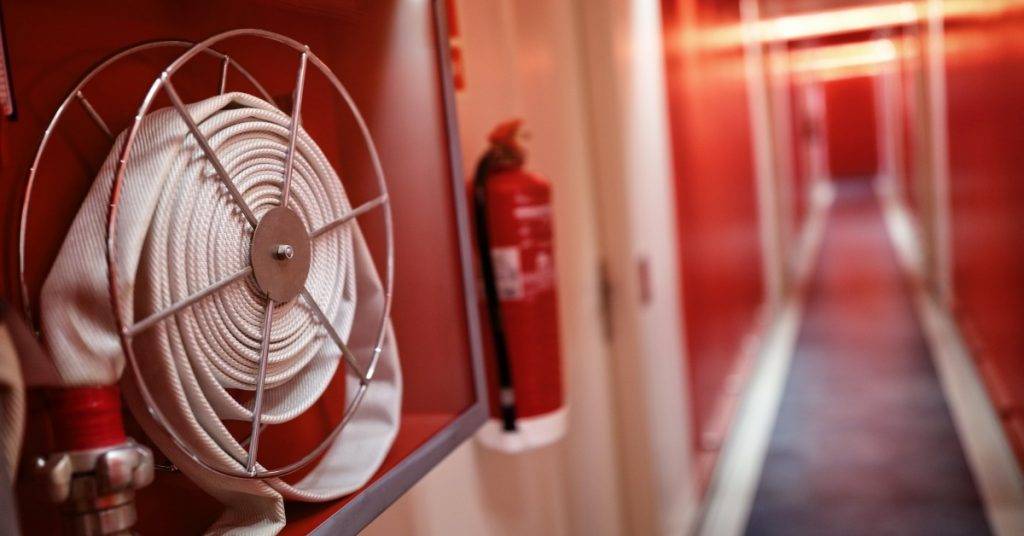
Fire fighting equipment is generally comprised of hundreds of different pieces of equipment and technology. Here are 4 major fire safety equipment:
1. Fire Extinguishers

Portable fire extinguishers play a major role in building safety equipment and industrial life safety systems. The majority of industrial areas are supplied with multipurpose class ABC dry chemical fire extinguishers. Other types of fire extinguishers include carbon dioxide, water, halon (being phased out), Type K liquid mist (kitchens) and Met-L-X (class D metals fires). The type of portable fire extinguisher should be compatible with the potential fire hazards, operations and building materials in the immediate area.
All on-site workers have the responsibility for knowing the location, operation, and limitations of the fire extinguishers in the work area. Supervisors, principal investigators and building coordinators must ensure all workers are shown the locations and trained in the use of area fire extinguishers. Portable fire extinguishers should not be blocked at any time and be well marked for emergency use. After use, the extinguisher must be recharged or replaced by authorized personnel. Trainings on the safe use of fire extinguishers must be completed prior to the special event. Green safety Limited offers formal Fire Safety and Fire Extinguisher training.
How do I obtain additional extinguishers for a special event? Contact Green Safety to obtain additional fire extinguishers.
2. Fire Doors

Fire doors are life safety devices that contain fires and keep them from growing out of control. Because of this, all fire doors must not be propped open at any time. If only one stairwell door is propped open during a fire, the stairwell becomes an active smoke-filled chimney – not the safe haven needed for safely exiting the building. Fire doors can remain open only if they are specifically designed to close when a fire alarm is triggered.
3. Fire Sprinklers

Automatic fire-extinguishing systems are placed in areas where fire potential and risk of injury or damage are high. The system is usually a water sprinkler system but may also be a foam, carbon dioxide, halon (being phased out), FM 200, or dry chemical type. Power plants, hospitals, clinics, laboratories, computer rooms, food preparation facilities, laundry rooms, residential life halls, athletic arenas, etc. are typical areas with automatic fire-extinguishing systems.
It is the responsibility of supervisors, principal investigators and building coordinators to assure on-site operational workers are informed of the systems presence and advised of the safety precautions required with its use. Industrial Facilities or the responsible industrial department maintains service and repair of all automatic fire-extinguishing systems.
4. Heat & Smoke Detector

For life safety purposes, heat sensors and smoke detectors are a significant part of the building safety equipment. They may be designed into the home or industrial fire alarm system, may trigger an automatic extinguishing system, or serve as a local alarm only. Various home or industrial operations may generate heat, vapor or smoke so determining the type and location of the detectors need to be carefully evaluated to avoid frequent false alarms. All on-site operational workers should be informed of the detectors presence and safety precautions.
Green safety limited offers the best fire safety Equipment and service.