
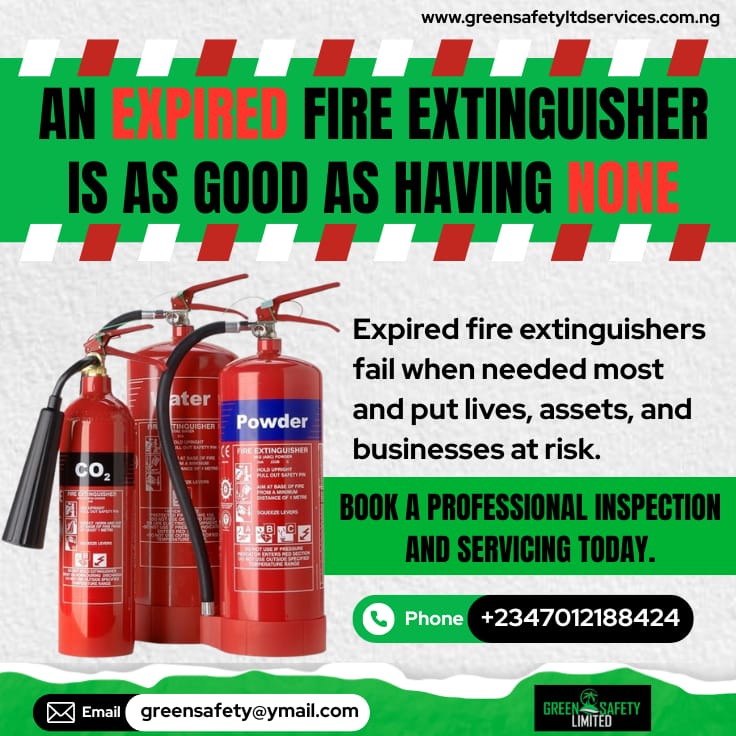
Fire Extinguisher Servicing Frequency in Nigeria: What the Law and Safety Standards
Require
Across Nigeria, thousands of businesses install fire extinguishers to meet safety requirements.
Unfortunately, many stop there. Over time, those extinguishers lose pressure, expire internally, or
develop faults that make them useless during a real fire.
During inspections, regulators don’t just check if an extinguisher is mounted on the wall. They
check whether it works, whether it has been serviced, and whether records exist to prove
compliance. This is where many businesses fail.
Understanding the correct fire extinguisher servicing frequency in Nigeria is critical for safety,
compliance, and business continuity.
Why Fire Extinguisher Servicing Is Mandatory
Fire extinguishers are mechanical safety devices, not permanent fixtures. Even when untouched,
they degrade over time.
Pressure slowly leaks, internal seals weaken, and dry chemical agents can cake or clog the
nozzle. In CO₂ extinguishers, undetected leakage can leave the cylinder empty while the gauge
still appears normal. Water and foam extinguishers can corrode internally, weakening the
cylinder.
This creates a dangerous false sense of safety. Staff assume protection is available, but during an
emergency, the extinguisher may fail completely.
Regular servicing is mandatory because it confirms that the extinguisher will function exactly
when it is needed most.
Recommended Fire Extinguisher Servicing Frequency in Nigeria
Fire safety standards in Nigeria align closely with international best practices. While
enforcement may vary, inspection expectations are consistent.
Monthly Visual Checks
Every fire extinguisher should undergo a basic visual check each month. This can be done
internally by trained staff or outsourced. The goal is to confirm that the unit is accessible,
properly mounted, sealed, and showing correct pressure.
Quarterly Checks for High-Risk Environments
Facilities with higher fire risk such as factories, fuel stations, commercial kitchens, and
warehouses require more frequent checks. Quarterly inspections help detect early faults before
they become dangerous failures.
Annual Professional Servicing
At least once every year, extinguishers must be serviced by a certified fire safety provider. This
includes pressure testing, internal examination where applicable, replacement of seals, proper
tagging, and documentation.
Hydrostatic Testing
Certain extinguishers require hydrostatic testing at defined intervals, depending on the type and
manufacturer. This test confirms the cylinder’s structural integrity and is critical for preventing
rupture during use.
Regulatory Expectations and Inspection Reality in Nigeria
During fire safety audits, inspectors go beyond surface checks. They examine servicing evidence
closely.
Inspectors typically check the pressure gauge condition, service tags, servicing dates, and
physical condition of the extinguisher. They also look for service records that confirm
professional maintenance was carried out.
If extinguishers are expired, untagged, depressurized, or poorly maintained, the business risks
failed inspections, fines, or operational shutdowns. In severe cases, insurers may also deny
claims after a fire incident.
Compliance is not theoretical. Inspectors expect proof.
High-Risk Facilities That Require Strict Monitoring
Some environments face higher fire exposure and therefore stricter scrutiny.
Factories and warehouses deal with machinery, electrical systems, and combustible materials.
Schools and hospitals must protect vulnerable populations and meet public safety obligations.
Fuel stations, commercial kitchens, and data centers face constant ignition risks and are often
prioritized during inspections.
In these facilities, fire extinguisher servicing is not optional or occasional. It must be systematic,
documented, and professionally managed.
Why Professional Servicing Beats In-House Checks
While internal checks are useful, they cannot replace professional servicing.
Certified providers validate whether the correct extinguisher type is installed for the specific fire
risk. They detect internal faults that visual checks cannot reveal. Most importantly, they issue
proper service tags and documentation recognized during inspections.
Professional servicing also helps businesses stay ahead of compliance deadlines and avoid
emergency replacements during audits.
Staying Compliant Without the Stress
Fire extinguisher maintenance should not be reactive. Businesses that wait until inspections are
announced often rush, overspend, or still fail.
Working with a professional fire safety company ensures routine servicing, accurate records, and
peace of mind. This turns compliance into a system rather than a last-minute scramble.
Call to Action
Don’t wait for an inspection notice or an emergency.
Book a professional fire extinguisher inspection and servicing today and keep your facility safe,
compliant, and audit-ready.
Frequently Asked Questions (FAQ)
Is annual servicing enough for all businesses?
Annual professional servicing is mandatory, but high-risk facilities also require more frequent
checks.
Can staff handle fire extinguisher servicing internally?
Staff can perform basic visual checks, but certified professionals must handle formal servicing
and documentation.
What happens if an extinguisher fails inspection?
Failed inspections can lead to fines, shutdowns, or insurance complications.
Do expired extinguishers still work?
Some may discharge, but effectiveness is unreliable and unsafe. Expired extinguishers are
considered non-compliant.