
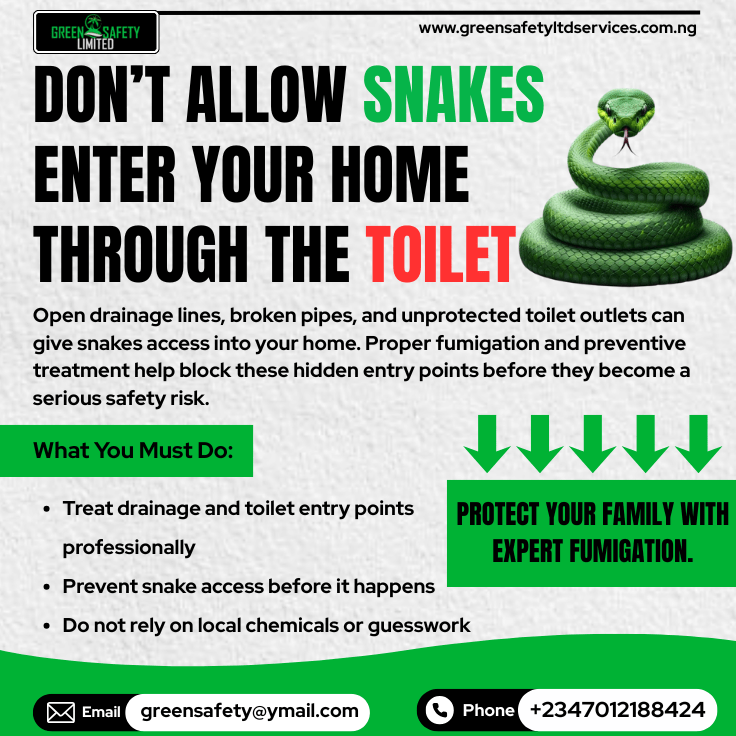
Snake intrusion is a growing safety concern for homes and farms across Nigeria, especially in
semi-urban, rural, and agricultural communities. From residential compounds with overgrown
surroundings to farmlands close to bushes and water sources, snakes pose serious risks to human
life, livestock, and productivity.
Beyond the fear factor, snake bites can result in medical emergencies, work disruption, legal
liabilities, and in extreme cases, fatalities. For farm owners, snake presence can also affect
workers’ safety compliance and operational continuity. Effective snake fumigation and
prevention is therefore not optional; it is a critical safety and risk management issue that requires
professional attention.
Understanding Snake Infestation Risks in Nigeria
Why Snakes Enter Homes and Farms
Snakes are attracted to environments that provide food, shelter, and minimal disturbance. In
Nigeria, common risk factors include poor waste management, rodent infestation, thick
vegetation, open drainage systems, abandoned materials, and poorly sealed buildings.
On farms, irrigation channels, grain storage areas, poultry houses, and bushy boundaries create
ideal hiding and hunting zones. During rainy seasons and extreme heat, snakes are more likely to
seek refuge in residential and farm structures, increasing human contact.
Safety and Health Implications
Snake encounters can result in venomous bites, panic-related injuries, and long-term trauma. For
farms and estates, this translates to lost man-hours, unsafe work conditions, and potential liability
where workers or tenants are affected. Snake incidents also expose gaps in basic HSE risk
assessments and environmental control measures.
Legal and Compliance Considerations in Nigeria
While Nigeria does not have snake-specific legislation, workplace and property safety
obligations fall under general health and safety principles aligned with OSHA best practices and
Nigerian environmental health regulations. Property owners, facility managers, and farm
operators have a duty of care to provide a reasonably safe environment.
Failure to manage known environmental hazards, including pest and wildlife risks, may result in
regulatory sanctions, civil claims, or insurance disputes following incidents. Documented
fumigation and pest control programs demonstrate compliance, due diligence, and responsible
facility management.
Effective Snake Fumigation and Control Methods
Professional Snake Fumigation
Snake fumigation involves the controlled application of environmentally appropriate repellents
and treatments that discourage snake habitation without harming humans, livestock, or crops.
Unlike insect fumigation, snake control requires expertise in habitat behavior, entry pathways,
and long-term deterrence strategies.
Professional fumigation targets hiding zones, nesting areas, fence lines, drainage systems, and
storage spaces. It is conducted with proper risk assessment, chemical handling procedures, and
post-treatment monitoring.
Habitat Modification and Environmental Control
Fumigation alone is not sufficient. Effective snake prevention combines treatment with
environmental management. Clearing bushes, sealing building gaps, controlling rodents,
managing waste, and improving drainage significantly reduce snake attraction.
On farms, proper storage of feed, regular bush clearing, and structured perimeter management
are essential preventive measures. These steps also align with general farm safety and biosecurity
standards.
Why Professional Services Matter
DIY snake control methods often fail due to improper chemical selection, unsafe application, and
lack of follow-up assessment. Some locally used substances pose health and environmental risks,
while others provide only temporary relief.
Professional services ensure correct inspection, safe chemical use, documented treatment
records, and ongoing risk monitoring. GreenSafety Limited provides structured snake fumigation
and prevention programs designed for Nigerian residential and agricultural environments, with
emphasis on safety, effectiveness, and compliance.
Our approach integrates inspection, treatment, preventive recommendations, and advisory
support to deliver sustainable results rather than short-term fixes.
Call to Action (CTA)
Protect your home, farm, and workers from snake risks.
Contact GreenSafety Limited today for a professional snake fumigation and prevention
assessment.
FAQ SECTION
How often should snake fumigation be done?
Frequency depends on location, environment, and season. High-risk areas such as farms and
bushy compounds may require treatment every 3–6 months, alongside preventive maintenance.
Is snake fumigation safe for children and livestock?
When conducted professionally using approved methods, snake fumigation is safe. GreenSafety
Limited applies controlled treatments with safety precautions and post-service guidance.
Can fumigation permanently eliminate snakes?
No method guarantees permanent elimination. The goal is risk reduction through deterrence,
habitat control, and ongoing prevention.
Are snakes protected wildlife in Nigeria?
Some species are protected, which is why professional non-lethal control and repellant-based
fumigation is recommended instead of killing or trapping.
Who is responsible for snake control on rented properties?
Typically, property owners or facility managers are responsible for environmental safety,
including pest and snake control, unless stated otherwise in tenancy agreements.