
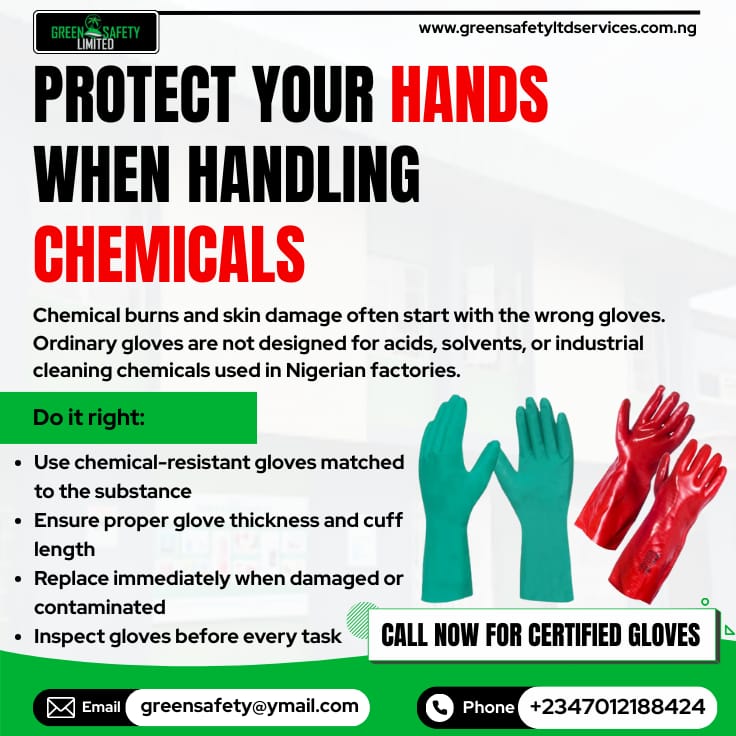
Chemical handling in Nigerian factories presents serious risks to worker health and operational
continuity. Without appropriate hand protection, employees face burns, dermatitis, severe
irritation, and long-term health issues. Choosing the right chemical-resistant gloves isn’t just a
box to tick, it’s a critical line of defense in operational safety.
In the Nigerian manufacturing context, whether in paint plants, pharmaceutical packaging, food
processing with sanitation chemicals, or petrochemical support services, hand protection must
be tailored, certified, and fit-for-purpose. Improper glove selection can lead to contamination,
non-compliance, workplace injuries, increased costs, and regulatory scrutiny.
Why Chemical Hand Protection Matters
Safety Risks of Inadequate Gloves
Handling corrosive substances, solvents, acids, and cleaning agents without the right gloves
exposes workers to chemical burns, cuts, and even systemic absorption of hazardous materials.
Skin exposure increases the likelihood of accidents, reduces worker confidence, and may result
in lost workdays and costly medical intervention.
Legal and Regulatory Context in Nigeria
While Nigeria’s OSHA framework and related health and safety guidelines require appropriate
personal protective equipment (PPE) for hazardous tasks, enforcement and compliance
documentation are increasingly expected by clients, insurers, and multinational partners.
OSHA-style regulations and best practices demand documented risk assessment and suitable
PPE selection based on chemical hazard profiles.
Proper glove selection is a key compliance element, and documented glove use demonstrates due
diligence, reduced liability, and improved audit outcomes.
Selecting the Right Chemical Handling Gloves
Understanding Chemical Resistance Ratings
Not all gloves are created equal. Chemical resistance depends on the material and thickness
relative to the substance handled. Key materials include:
Nitrile Gloves:
Highly resistant to oils, solvents, and some acids. Suitable for light to medium chemical handling
with excellent puncture resistance.
Neoprene Gloves:
Good for handling oils, acids, caustics, and some solvents. A balance of chemical resistance and
flexibility.
PVC (Polyvinyl Chloride) Gloves:
Effective against certain acids and alkalis; cost-effective but may be less flexible over long use.
Butyl Rubber Gloves:
Excellent for gas and ketone resistance; used where permeation risk is high.
Each material has specific breakthrough times and limitations. Professional assessment ensures
the right glove type is matched to the chemical hazard and task duration.
Fit, Comfort, and Dexterity
Chemical-resistant gloves must protect without compromising task performance. Poorly fitting
gloves reduce dexterity, increase fatigue, and may be removed during critical tasks. Industrial
gloves with ergonomic design, internal lining, and appropriate cuff length improve worker
compliance and safety.
Inspection and Replacement Schedules
Gloves must be inspected before each use for tears, swelling, thinning, or contamination. A
documented inspection routine and replacement schedule avoid silent failures and maintain high
safety standards on the factory floor.
Operational and Business Impact
Worker Health and Productivity
Proper PPE reduces injury rates, builds worker confidence, and supports productivity. Frequent
glove failures and skin injuries disrupt shifts, increase absenteeism, and drive up medical and
compensation costs.
Liability and Compliance Risk
In the event of chemical exposure incidents, improperly specified gloves can expose
management to compliance violations, penalties, and insurance challenges. Documented glove
selection and usage records help in audits and incident investigations.
Why Professional PPE Services Matter
Many factories assume all “heavy-duty gloves” are suitable for chemical tasks. This DIY
approach can fail due to incorrect material selection, improper sizing, and lack of chemical
hazard evaluation.
GreenSafety Limited provides professional PPE assessment, supply, and fitment services specific
to chemical handling needs in Nigerian industrial environments. Our experts assess chemical
profiles, recommend certified glove types, assist with training on proper use, and support
documentation for compliance audits.
Professional services prevent guesswork, reduce risk, and ensure long-term safety and cost
efficiency.
Call to Action (CTA)
Protect your workforce with the right chemical handling gloves and professional PPE support.
Contact GreenSafety Limited today for a certified glove assessment and supply solution.
FAQ SECTION
What makes chemical-resistant gloves different from regular gloves?
Chemical-resistant gloves are made from specific polymers that impede chemical permeation
and provide protection against corrosive or toxic substances, unlike general-purpose gloves.
How often should chemical gloves be replaced?
Replace gloves when any sign of damage, contamination, or wear appears. In high-use
environments, daily inspection and frequent replacement are recommended.
Can one type of glove protect against all chemicals?
No. Each glove material resists specific chemicals. Professional evaluation ensures the correct
material is used based on chemical hazard profiles.
Are thicker gloves always better?
Not necessarily. Thicker gloves may provide resistance but can reduce dexterity. Material
compatibility and task needs should determine selection.
Do Nigerian factories need documentation for PPE compliance?
Yes. Documented risk assessments, PPE specifications, and usage records support regulatory
compliance and reduce liability during audits or incidents.