
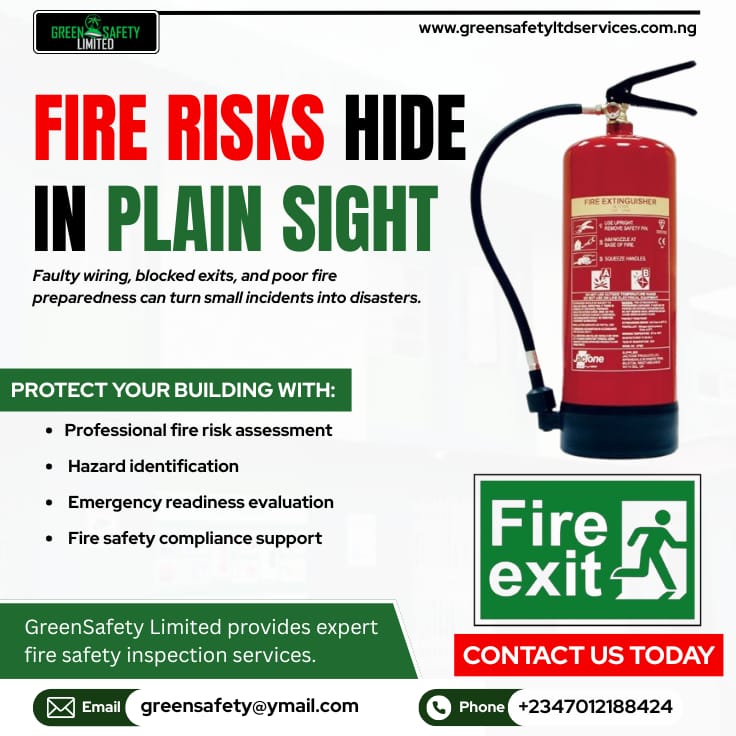
Fire outbreaks remain one of the most serious threats to commercial, industrial, and residential
buildings in Nigeria. Electrical faults, poor housekeeping, overloaded circuits, improper storage
of flammable materials, and lack of emergency preparedness continue to contribute to
preventable fire incidents across the country.
Unfortunately, many buildings only react to fire safety after an incident occurs. Fire
extinguishers may be installed, but without a proper understanding of fire hazards within the
building, critical risks often remain unnoticed.
A fire risk assessment is a structured process used to identify potential fire hazards, evaluate the
level of risk, and recommend practical control measures to reduce the likelihood of fire
outbreaks and improve emergency response readiness.
At GreenSafety Limited, we conduct professional fire risk assessment services tailored to
Nigerian buildings and operational environments, helping organizations strengthen safety
compliance and protect lives and property.
What Is a Fire Risk Assessment?
A fire risk assessment is a systematic evaluation of a building to determine:
● Potential sources of ignition
● Materials that could fuel a fire
● Areas where occupants may be vulnerable
● Existing fire protection measures
● Gaps in emergency preparedness
The goal is not just to identify hazards, but to reduce risks through practical safety
improvements.
GreenSafety Limited conducts assessments using structured inspection methods designed to help
businesses identify weaknesses before they become emergencies.
Why Fire Risk Assessments Are Essential in Nigeria
Increasing Fire Hazards in Buildings
Many Nigerian buildings face challenges such as unstable power supply, generator usage,
overloaded electrical systems, and poor maintenance practices.
These conditions significantly increase fire risks, especially in offices, factories, warehouses,
schools, and residential estates.
Without proper assessment, hidden hazards can remain undetected until a fire outbreak occurs.
Legal and Compliance Responsibilities
Organizations have a responsibility to maintain safe environments for workers, occupants, and
visitors.
Fire risk assessments support compliance with workplace safety obligations and align with
recognized fire safety principles such as NFPA standards and general HSE best practices.
For many businesses, conducting regular assessments also improves preparedness during
inspections by regulators, clients, or insurance providers.
Protection of Lives and Property
The primary purpose of a fire risk assessment is prevention.
Early identification of hazards reduces the likelihood of fire outbreaks, minimizes property
damage, and improves emergency response capability.
Fire Risk Assessment Services We Conduct
At GreenSafety Limited, our fire risk assessment process is designed to evaluate both physical
conditions and operational practices within buildings.
Inspection of Electrical Systems
Electrical faults are among the leading causes of fires in Nigeria.
We inspect visible electrical installations, overloaded extension systems, exposed wiring, and
unsafe power practices that may increase ignition risks.
Identification of Fire Hazards
We assess potential ignition sources such as:
Faulty electrical equipment
Improper fuel storage
Heat-producing machinery
Poorly maintained generators
Unsafe cooking or heating areas
This helps organizations understand where fire outbreaks are most likely to occur.
Evaluation of Flammable Material Storage
Improper storage of chemicals, paper materials, fuel, and combustible products increases fire
intensity and spread.
We evaluate storage practices and recommend safer handling and containment measures.
Assessment of Fire Detection and Protection Systems
A building may have fire safety equipment installed, but that does not guarantee readiness.
We inspect systems such as:
Fire extinguishers
Fire alarm systems
Smoke detectors
Fire hose reels
Emergency lighting
The goal is to determine whether these systems are accessible, functional, and suitable for the
building environment.
Emergency Exit and Evacuation Review
During emergencies, blocked exits and poor evacuation planning can lead to injuries and panic.
We assess emergency routes, signage, accessibility, and evacuation procedures to ensure
occupants can exit safely during fire incidents.
Housekeeping and Environmental Safety Review
Poor housekeeping contributes significantly to fire risks.
Accumulated waste, cluttered workspaces, and poor ventilation increase the likelihood of fire
spread.
GreenSafety Limited evaluates workplace organization and environmental conditions as part of
the assessment process.
Common Fire Safety Problems Found in Buildings
Through our field experience, some of the most common issues identified include:
Expired or poorly maintained extinguishers
Blocked emergency exits
Improper electrical connections
Lack of fire safety training
Overloaded power systems
Poor placement of firefighting equipment
Many organizations are unaware of these problems until professional inspections are conducted.
Why Professional Fire Risk Assessment Matters
Many businesses rely on visual assumptions instead of structured evaluation.
A professional fire risk assessment provides documented findings, expert recommendations, and
practical corrective actions tailored to the building’s operations.
GreenSafety Limited combines technical safety knowledge with local operational understanding,
ensuring assessments are both practical and relevant to Nigerian conditions.
Benefits of Fire Risk Assessments
Regular fire risk assessments help organizations:
Reduce fire outbreak risks
Improve emergency preparedness
Protect employees and occupants
Strengthen compliance with safety requirements
Reduce operational disruptions and liability risks
They also support long-term facility management by identifying safety weaknesses early.
Why Choose GreenSafety Limited
GreenSafety Limited provides professional fire safety services designed for Nigerian workplaces
and facilities.
We understand the common fire risks associated with local operational environments and provide
practical recommendations that organizations can implement effectively.
Our approach focuses on prevention, compliance, and long-term safety improvement—not just
inspections.
Conclusion
Fire safety cannot be left to assumptions. Every building contains potential fire risks that must be
identified and controlled proactively.
A professional fire risk assessment helps organizations understand these hazards, improve
preparedness, and reduce the likelihood of devastating fire incidents.
Waiting until after a fire outbreak is always more costly than prevention.
Call to Action (CTA)
Protect your building before fire risks become emergencies.
Contact GreenSafety Limited today for professional fire risk assessment services across
Nigeria.
FAQ SECTION
What is the purpose of a fire risk assessment?
It identifies fire hazards and recommends measures to reduce fire risks.
How often should fire risk assessments be conducted?
Assessments should be done regularly and whenever significant building or operational changes
occur.
Can small businesses benefit from fire risk assessments?
Yes, fire risks exist in both small and large facilities.
Do fire extinguishers alone guarantee fire safety?
No. Fire safety requires hazard assessment, emergency planning, and proper maintenance.
Does GreenSafety Limited provide fire safety inspections?
Yes, we conduct professional fire risk assessments and fire safety support services.