
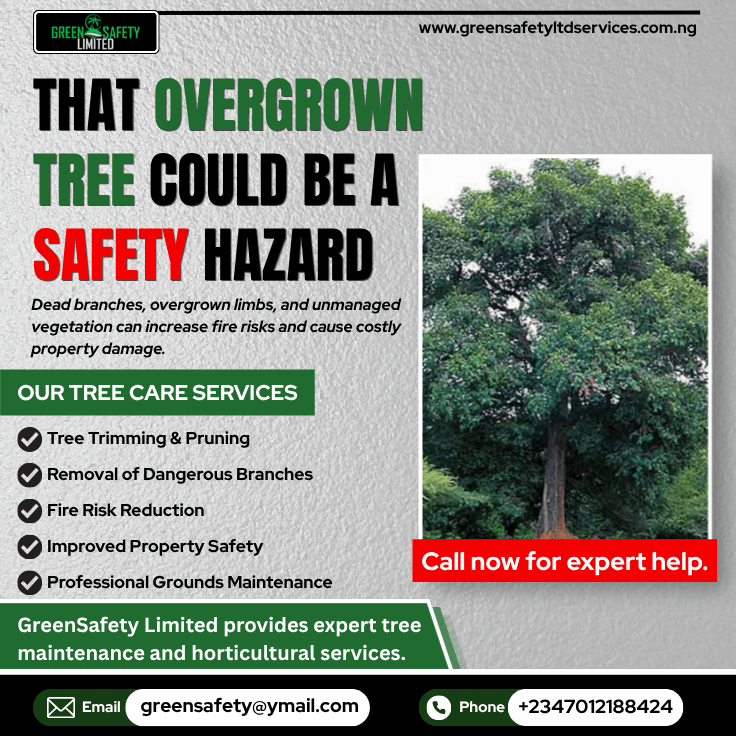
Trees provide shade, beautify landscapes, improve air quality, and contribute positively to the
environment. However, when trees are left unmanaged, they can become significant safety
hazards for homes, commercial properties, industrial facilities, estates, schools, and public
institutions.
Many property owners do not realize that overgrown trees can contribute to fire outbreaks,
structural damage, power interruptions, pest infestations, and workplace accidents. What begins
as a minor maintenance issue can quickly become a costly safety concern.
In Nigeria, where dry seasons, strong winds, heavy rainfall, and expanding urban infrastructure
create additional risks, proper tree maintenance is a critical part of facility safety management.
GreenSafety Limited provides professional horticultural and facility maintenance services that
help organizations identify and eliminate tree-related hazards before they result in accidents or
property damage.
Why Overgrown Trees Should Not Be Ignored
Many people view overgrown trees as purely aesthetic concerns. In reality, poorly maintained
trees can create serious safety and operational challenges.
As trees grow, branches may extend over buildings, power lines, roadways, parking areas,
drainage systems, and pedestrian walkways.
Without routine trimming and maintenance, these conditions increase risks to people, property,
and business operations.
Proper tree management helps maintain safer environments while preserving the health and
appearance of the landscape.
Fire Risks Associated with Overgrown Trees
One of the most overlooked dangers of unmanaged trees is their potential contribution to fire
incidents.
Dry Branches Become Fire Fuel
Dead and dry branches can easily ignite when exposed to sparks, open flames, electrical faults,
or bush fires.
During dry seasons, these branches become highly combustible and can accelerate the spread of
fire.
Properties with large amounts of dry vegetation face significantly greater fire exposure.
Tree Contact with Electrical Infrastructure
Branches growing into power lines create serious fire hazards.
Strong winds can cause branches to rub against electrical cables, leading to:
Electrical faults
Power outages
Sparking
Potential fire outbreaks
Regular trimming helps maintain safe clearance between trees and utility infrastructure.
Fire Spread Between Properties
Overgrown trees can act as pathways that allow fire to spread quickly from one area to another.
A fire originating in nearby vegetation may travel through connected tree canopies and threaten
surrounding buildings.
This risk is particularly important for estates, industrial facilities, schools, and commercial
properties.
Structural Damage Risks
Tree growth can cause significant damage to buildings and infrastructure.
Roof Damage
Heavy branches hanging above roofs may break during storms or high winds.
Falling limbs can damage:
● Roofing sheets
● Ceilings
● Windows
● Solar panels
● Outdoor equipment
Repair costs often exceed the cost of preventive maintenance.
Foundation and Pavement Damage
Tree roots naturally expand as trees mature.
In some cases, roots can:
● Crack pavements
● Damage drainage systems
● Affect building foundations
● Distort walkways and driveways
Routine assessment helps identify root-related risks before major damage occurs.
Safety Hazards for Employees, Residents, and Visitors
Overgrown trees can create direct safety risks for people within a property.
Falling Branches
Weak or diseased branches may fall unexpectedly.
This can result in:
● Personal injuries
● Vehicle damage
● Property damage
● Operational disruptions
Areas with high pedestrian activity require particular attention.
Obstructed Visibility
Trees that block sightlines can create hazards around:
● Facility entrances
● Road intersections
● Parking lots
● Security checkpoints
● Emergency access routes
Proper trimming improves visibility and enhances overall site safety.
Blocked Walkways and Access Routes
Low-hanging branches can obstruct movement and create accident risks.
Employees, customers, and visitors may be forced into unsafe paths to avoid obstructions.
Pest and Rodent Infestation Risks
Overgrown trees often provide shelter for pests and rodents.
Dense vegetation creates ideal hiding and nesting locations for:
● Rodents
● Snakes
● Termites
● Ants
● Mosquitoes
● Other insects
Branches touching buildings can also serve as access routes for pests entering structures.
GreenSafety Limited frequently identifies vegetation-related pest problems during facility
inspections.
Drainage and Environmental Concerns
Falling leaves and branches can contribute to drainage blockage.
Blocked drainage systems often result in:
● Water stagnation
● Mosquito breeding
● Flooding
● Property damage
● Environmental sanitation concerns
Routine tree maintenance helps reduce these risks and supports effective drainage management.
Why Professional Tree Management Matters
Tree maintenance involves more than simply cutting branches.
Professional assessment is necessary to determine:
● Tree health
● Structural stability
● Fire exposure risks
● Branch failure potential
● Safe trimming methods
● Environmental impact
Improper cutting can weaken trees and create additional hazards.
GreenSafety Limited provides structured tree management services that prioritize safety,
compliance, and long-term landscape health.
Our Tree Maintenance Approach
At GreenSafety Limited, we help clients maintain safe and attractive outdoor environments
through professional horticultural services.
Our approach includes:
● Tree risk assessments
● Branch trimming and pruning
● Removal of dead or hazardous limbs
● Vegetation control
● Grounds maintenance
● Fire risk reduction measures
These services help reduce safety hazards while preserving property appearance.
Benefits of Regular Tree Maintenance
Organizations that maintain trees properly often experience:
● Reduced fire risks
● Lower property damage costs
● Improved facility appearance
● Better visibility and security
● Reduced pest activity
● Safer work environments
● Enhanced environmental management
These benefits contribute directly to operational safety and property value.
Why Choose GreenSafety Limited
GreenSafety Limited combines expertise in facility safety, environmental management,
horticulture, and risk prevention.
We understand how landscape maintenance affects overall property safety and provide solutions
tailored to Nigerian environmental conditions.
Our services help businesses, institutions, estates, and property owners maintain safer and more
professional environments.
Call to Action (CTA)
Reduce fire hazards and property risks caused by overgrown trees.
Contact GreenSafety Limited today for a professional tree assessment, trimming, and
facility safety maintenance service.
FAQ SECTION
Can overgrown trees increase fire risks?
Yes. Dry branches and vegetation can act as fuel and contribute to fire spread.
Why should trees near power lines be trimmed?
Branches touching power lines can cause electrical faults, sparks, and potential fire outbreaks.
Can tree roots damage buildings?
Yes. Expanding roots can affect foundations, pavements, and drainage systems.
Do overgrown trees attract pests?
Yes. Dense vegetation often provides shelter for rodents, snakes, insects, and other pests.
How often should trees be inspected?
Properties should conduct regular inspections, especially before rainy and dry seasons.
Does GreenSafety Limited provide tree trimming services?
Yes. We offer professional tree maintenance, pruning, vegetation control, and facility
horticultural services.