
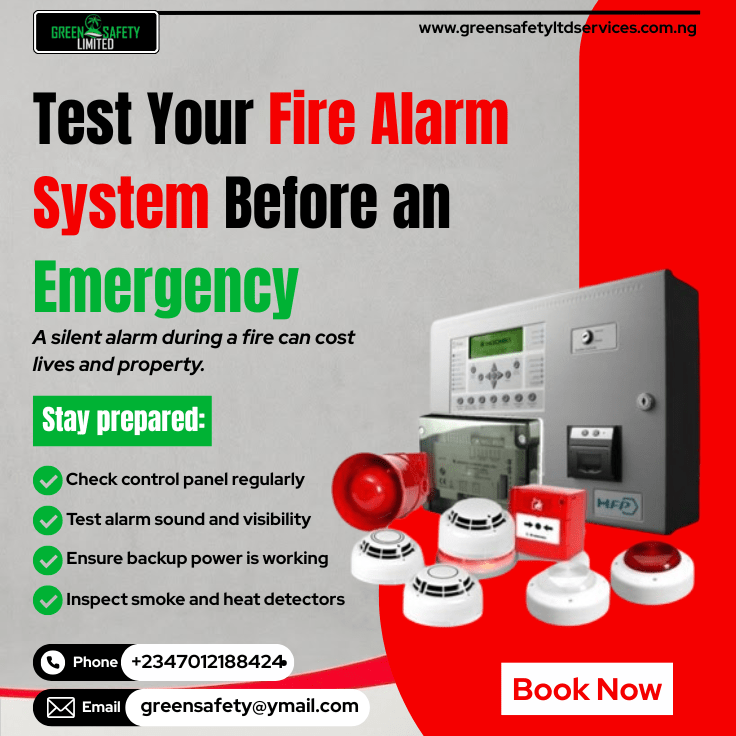
Fire incidents in office environments often escalate quickly when detection systems fail or are
not properly maintained. In many Nigerian workplaces, fire alarm systems are installed but
rarely tested, poorly maintained, or completely ignored after installation.
A non-functional fire alarm system creates a false sense of safety. When alarms fail during an
emergency, the result can be delayed evacuation, property damage, injuries, or loss of life.
Regular testing is not just a technical requirement, it is a critical part of workplace safety and
compliance.
A structured fire alarm systems testing checklist helps ensure that all components are functioning
correctly and that the system can respond effectively when needed.
Why Fire Alarm Testing Is Critical
Early Detection Saves Lives
Fire alarm systems are designed to detect smoke, heat, or fire at early stages. If sensors, control
panels, or alarms are faulty, detection may be delayed, increasing the risk of severe damage and
injury.
Compliance and Regulatory Expectations
Workplace safety practices in Nigeria, aligned with OSHA principles and global standards such
as NFPA, require functional fire detection systems and regular maintenance. Documentation of
testing and inspection is often required during audits, inspections, and insurance evaluations.
Failure to maintain fire alarm systems may lead to penalties, legal liability, or rejected insurance
claims after fire incidents.
Business Continuity and Asset Protection
A working fire alarm system reduces response time, limits damage, and protects business
operations. It ensures staff can evacuate safely and emergency services are alerted promptly.
Fire Alarm Systems Testing Checklist for Offices
- Control Panel Inspection
The control panel is the central unit of the fire alarm system. During testing:
● Check for any fault indicators or warning lights
● Ensure the panel displays normal operating status
● Confirm backup power (battery) is functional
● Verify system logs and previous fault records
A faulty control panel compromises the entire system. - Alarm Sounders and Notification Devices
Alarm sounders must be loud and clear enough to alert all occupants.
● Test alarm audibility in all office areas
● Ensure sirens, bells, or speakers are functioning
● Confirm visual alarms (strobes) work where installed
All occupants must be able to hear or see the alarm during activation. - Smoke and Heat Detectors
Detectors are critical for early fire detection.
● Test smoke detectors using approved testing methods
● Check heat detectors for proper response
● Ensure detectors are free from dust, dirt, or obstruction
● Confirm correct placement and coverage
Blocked or dirty detectors may fail to detect fire early. - Manual Call Points (Break Glass Units)
Manual call points allow occupants to trigger the alarm.
● Test activation of call points
● Ensure accessibility and proper labeling
● Confirm protective covers (if installed) are intact
Employees must be able to activate alarms easily during emergencies. - Power Supply and Backup Systems
Fire alarm systems must function even during power failure.
● Test main power supply connection
● Verify backup batteries are charged and operational
● Simulate power outage to confirm system response
Reliable power ensures continuous protection. - Wiring and System Connections
Faulty wiring can cause system failure.
● Inspect visible wiring for damage or wear
● Check connections between devices and control panel
● Ensure no loose or exposed cables
Professional inspection is required for detailed system integrity checks. - Integration with Other Safety Systems
Fire alarm systems often connect with other systems.
● Test integration with fire suppression systems
● Check linkage with emergency lighting
● Confirm connection to security or monitoring systems
Integrated systems improve response efficiency during emergencies.
Testing Frequency and Documentation
Routine Testing Schedule
Fire alarm systems should be tested regularly:
● Weekly or monthly basic checks
● Quarterly detailed inspections
● Annual comprehensive system testing
The frequency depends on building size, usage, and risk level.
Importance of Documentation
Every test must be recorded. Documentation should include:
● Date of testing
● Components tested
● Faults identified
● Corrective actions taken
Proper records support compliance, audits, and insurance claims.
Common Mistakes in Fire Alarm Maintenance
● Assuming installation guarantees functionality
● Ignoring minor faults or warning signals
● Using unqualified personnel for testing
● Failing to document inspections
● Skipping routine maintenance schedules
These mistakes can lead to system failure during emergencies.
Why Professional Fire Safety Services Matter
Fire alarm testing requires technical knowledge, proper tools, and adherence to safety standards.
DIY testing or informal checks may overlook critical faults.
GreenSafety Limited provides professional fire alarm inspection, testing, and maintenance
services for offices and commercial facilities in Nigeria. Our team ensures systems are fully
functional, compliant, and properly documented.
We help organizations move from reactive safety to structured fire risk management.
Call to Action (CTA)
Ensure your fire alarm system works when it matters most.
Contact GreenSafety Limited today for professional fire alarm testing and inspection
services.
FAQ SECTION
How often should fire alarm systems be tested in offices?
Basic checks should be done regularly, with comprehensive inspections at least once a year.
Can office staff test fire alarms themselves?
Basic checks can be done internally, but professional testing is required for full system
verification.
What happens if a fire alarm system fails during inspection?
Faults must be corrected immediately to ensure the system is fully operational.
Is fire alarm testing mandatory in Nigeria?
Yes. Workplace safety practices require functional fire detection systems and proper
maintenance.
Does GreenSafety Limited provide fire alarm testing services?
Yes. GreenSafety Limited offers professional fire safety inspection, testing, and maintenance
services.