
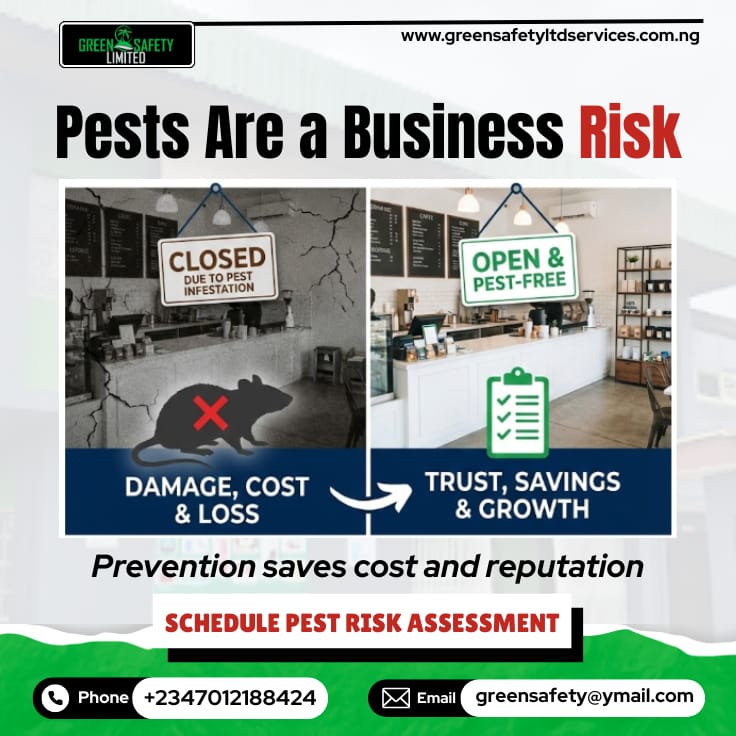
Pest control is often treated as an afterthought by many Nigerian businesses. Until rodents
appear, cockroaches multiply, or snakes are sighted, action is delayed. This reactive approach
exposes businesses to serious and often hidden risks that go far beyond discomfort or
inconvenience.
From offices and schools to factories, warehouses, hotels, and healthcare facilities, poor pest
control can silently undermine operations, compliance, and brand trust. Understanding these
risks is the first step toward prevention.
Common Pests Found in Nigerian Business Facilities
Nigeria’s climate and urban structure create ideal conditions for pests to thrive. The most
common pests affecting commercial and industrial facilities include rodents, cockroaches, ants,
flies, termites, mosquitoes, snakes, and stored-product insects.
Rodents contaminate food areas, damage cables, and increase fire risks by gnawing electrical
wiring. Cockroaches and flies spread bacteria across surfaces, especially in kitchens, hospitals,
and offices. Termites weaken wooden structures and furniture, often unnoticed until severe
damage occurs. Snakes pose direct physical danger in schools, farms, and industrial zones with
open surroundings.
Each pest category carries its own operational and safety risks.
Health and Regulatory Consequences of Poor Pest Control
Poor pest control directly impacts health and safety standards. Pests are known carriers of
bacteria, parasites, and pathogens that can cause food poisoning, allergies, respiratory infections,
and skin conditions.
Regulatory bodies in Nigeria increasingly emphasize hygiene and environmental safety.
Facilities found with active infestations may face warnings, fines, or closure orders, especially in
food processing plants, schools, hospitals, and hospitality businesses.
Health-related incidents linked to pest activity also expose organizations to lawsuits,
compensation claims, and insurance complications.
How Pest Infestation Damages Brand Reputation
Reputation is one of the most valuable assets of any business. A single pest sighting shared on
social media or reported by a client can cause lasting damage.
Customers associate pest presence with poor hygiene, negligence, and lack of professionalism.
For hotels, restaurants, schools, and offices, this perception can lead to loss of trust, reduced
patronage, and negative reviews that are difficult to reverse.
Even when infestations are later resolved, the reputational damage may already be done.
Why Reactive Fumigation Is Not Enough
Many businesses rely on emergency fumigation only after pests become visible. This approach is
flawed for several reasons.
Reactive fumigation treats symptoms rather than root causes. Without addressing entry points,
breeding areas, sanitation gaps, and environmental factors, pests return quickly. Repeated
emergency treatments also increase costs and disrupt operations.
Additionally, improper or frequent chemical use without planning may pose health risks to
occupants and staff.
The Integrated Pest Management Approach
Integrated Pest Management (IPM) is a preventive, risk-based approach that focuses on
long-term control rather than short-term elimination.
IPM combines inspection, monitoring, sanitation, structural repairs, targeted treatment, and staff
awareness. The goal is to reduce pest attraction, deny access, and control populations using safe
and effective methods.
This approach is particularly effective for offices, factories, schools, warehouses, and residential
estates where continuous operation and safety are priorities.
Why Professional Pest Risk Assessment Matters
A pest risk assessment identifies vulnerabilities before infestations occur. It evaluates building
layout, environmental conditions, waste handling, landscaping, and human behavior that attract
pests.
Professional assessments help businesses implement targeted solutions instead of generic
treatments. They also provide documentation that supports compliance and internal safety
policies.
How GreenSafety Limited Supports Businesses
GreenSafety Limited provides professional pest control and fumigation services designed for
Nigerian business environments. Services include:
● Comprehensive pest risk assessments
● Preventive and corrective fumigation programs
● Integrated pest management solutions
● Safe, compliant treatment methods
● Ongoing monitoring and maintenance
By focusing on prevention rather than reaction, GreenSafety Limited helps businesses protect
health, reputation, and operational continuity.
Frequently Asked Questions (FAQ)
How often should businesses carry out pest control in Nigeria?
The frequency depends on the facility type and risk level. High-risk environments may require
monthly or quarterly programs, while offices may follow scheduled preventive treatments.
Is pest control mandatory for businesses?
Many sectors are required to maintain hygiene standards. Pest presence during inspections can
lead to regulatory action.
Can pests affect electrical and fire safety systems?
Yes. Rodents frequently damage cables, increasing the risk of power failure and electrical fires.
Is preventive pest control cheaper than emergency fumigation?
Yes. Preventive programs reduce long-term costs, operational disruption, and repeated
treatments.
Pests should never be the reason your business faces health risks or reputational damage.
Request a professional pest risk assessment today and protect your facility before problems start.
Contact GreenSafety Limited for reliable, preventive pest control solutions across Nigeria.